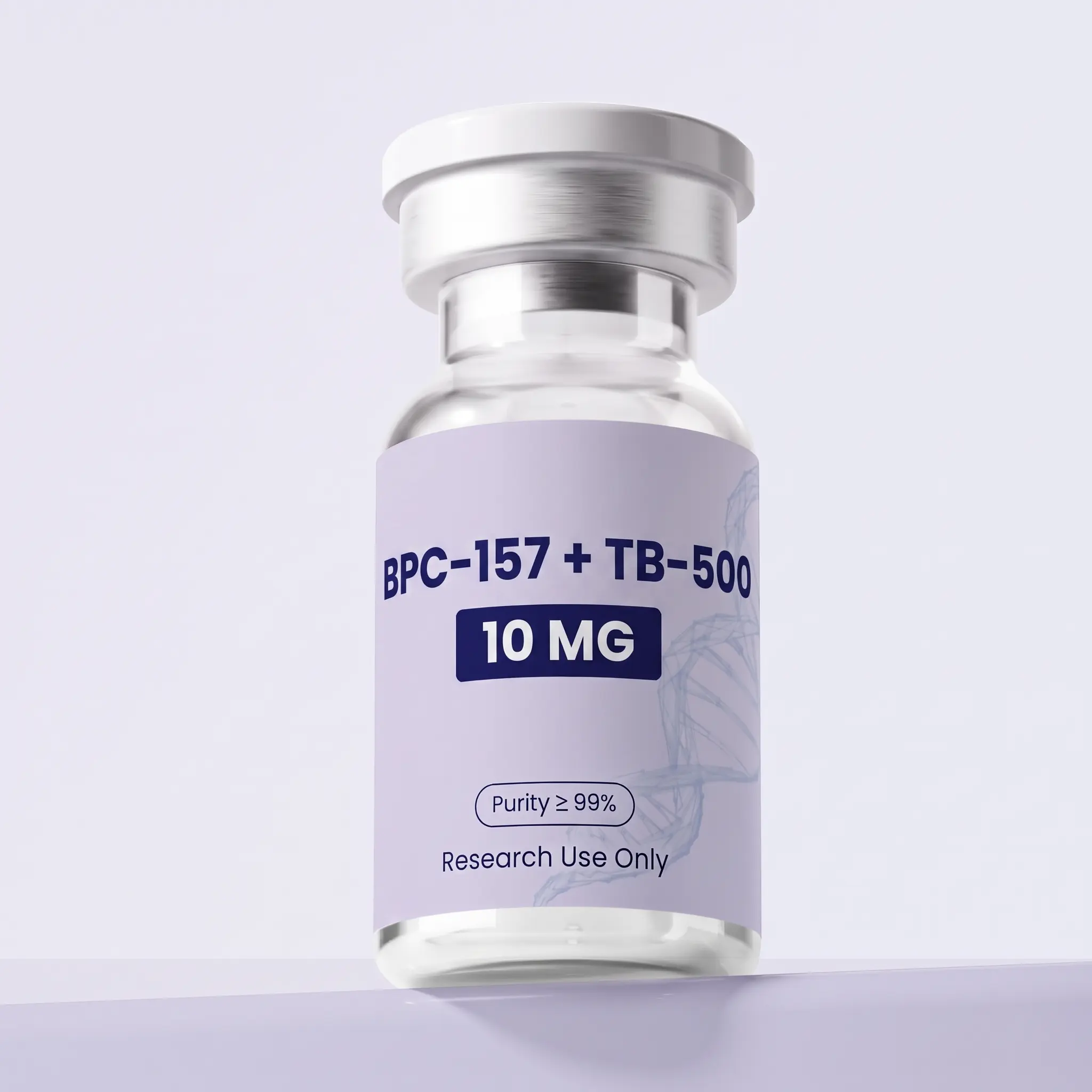
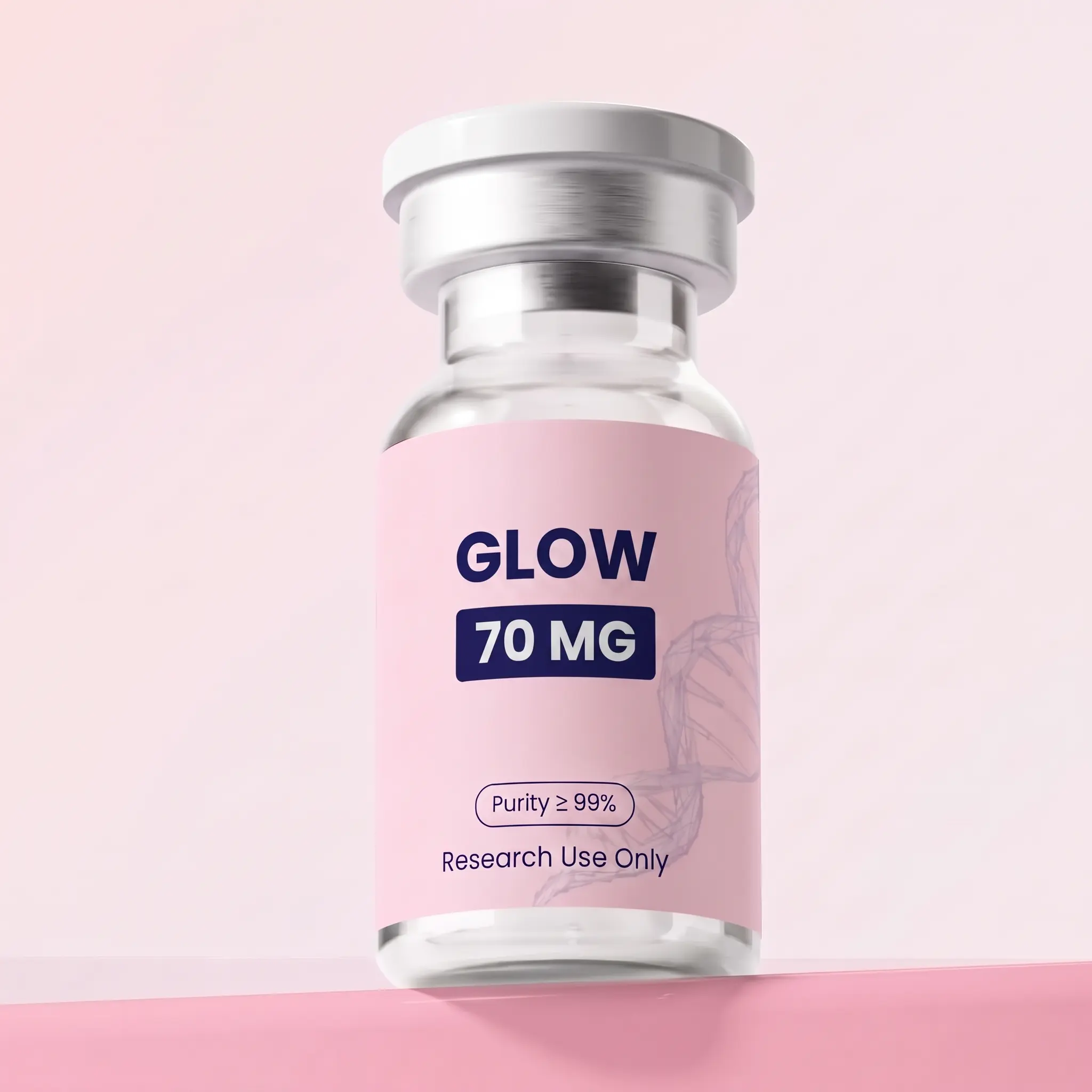
Buy GLOW Blend From Glow Peptide with Fast Checkout
Buy tested GLOW Blend online from Glow Peptide containing BPC-157, TB-500, and GHK-Cu in a co-lyophilised research formulation. Each vial is supplied as a lyophilised research material for laboratory research and controlled scientific applications. Shop GLOW Blend from Glow Peptide and review the available product details, specifications, and lot-specific testing information before ordering.
What Is GLOW Blend?
GLOW Blend is a co-lyophilised research preparation that combines three peptide components in one sealed vial:
- BPC-157
- TB-500
- GHK-Cu
Researchers have examined them individually in various subjects in biochemical and pre-clinical research. BPC-157 has been studied in peptide signalling and tissue pathway research. TB-500 has been studied in relation to cell migration and actin pathway research. GHK-Cu has been examined for copper binding and extracellular matrix pathway research. In addition, combining the three peptides gives researchers a single research sample.
GLOW Blend Composition
| Component | Research Material |
| BPC-157 | Synthetic pentadecapeptide |
| TB-500 | Synthetic thymosin beta-4 fragment |
| GHK-Cu | Copper-binding tripeptide |
| Form | Lyophilised powder |
| Vial | Sealed research vial |
| Catalog Code | GL70 |
| Purity Specification | ≥99% per component by HPLC |
However, the supplier’s current catalogue states the purity requirement as “≥99% per component by HPLC”. It is worth noting that this is a catalogue requirement, not a measurement of any particular batch. Therefore, we recommend checking the COA for the batch in question.
Quality & Testing
Documenting quality is an important aspect when assessing research material.
GLOW Blend comes with lot-specific documentation wherever possible. Scientists can access the corresponding Certificate of Analysis to see the analytical procedures and results for that particular lot.
Independent test information may include analytical procedures like HPLC and mass spectrometry, among others, depending on the lot documentation. It is important that scientists assess the actual report and not only product-page specifications.
What to Check on a COA
When reviewing a Certificate of Analysis, researchers can check:
- Lot number
- Product identification
- Reported purity
- Testing method
- Identity information
- Testing date
- Laboratory information
- Reported findings and limitations
Why Choose GLOW From Glow Peptides?
Here are some reasons researchers may consider Glow Peptides for research materials:
- Obtain the GLOW Research Compound Formulation in three parts.
- View product details before making an order.
- Obtain COA details for specific batches wherever available.
- Purchase lyophilised research compound in vial form.
- Verify analytical data pertaining to specific batch details.
- Utilise product details to maintain laboratory records.
- Get information on research compounds.
- Obtain customer service help for product and order queries.
- Avail discrete shipping services from the U.S.
Storage & Handling
The GLOW Blend comes as a freeze-dried lyophilised powder, packed in a sterile research vial. For laboratory handling, the product guidelines recommend storing the lyophilised, sealed sample cold and away from light.
Store in the freezer, following standard laboratory protocols. Keep the vial sealed until it is needed for laboratory use.
COA & Batch Verification
Evaluate every research material using documentation that corresponds to the specific lot being studied.
Before using GLOW Blend in a laboratory research protocol, review the applicable Certificate of Analysis and confirm:
Product → Lot Number → COA → Reported Results
The current GLOW product page provides access to specific lot certificates and a COA verification area.
Frequently Asked Questions
Which peptides make up GLOW Blend?
The preparation includes BPC-157, TB-500, and GHK-Cu.
What type of delivery system does GLOW Blend utilise?
GLOW Blend is delivered as a freeze-dried powder in a sealed vial suitable for research.
How is GLOW Blend analysed?
The documentation provided notes that research products can be supplied with lot-specific analytical documentation. The researcher should refer to the COA for the specific lot to identify the analysis conducted and results obtained.
Is there a COA for GLOW Blend?
Specific lot Certificates of Analysis can be provided for batches that have been listed. The researcher should ensure the matching of the COA with the lot of the material being analysed.
How should GLOW Blend be stored?
The lyophilised product should be kept refrigerated and out of light; long-term storage usually takes place under frozen conditions.